Introduction to Outdoor Porcelain Tiles
Outdoor porcelain tiles, often referred to as porcelain slabs, porcelain paving or external porcelain tiles, are engineered for strength, style, and low maintenance.
Created from compressed clay and fired at high temperatures, porcelain paving provides a tough, non-porous surface that performs well all year round. With options ranging from modern to natural-look finishes, porcelain paving is a popular choice for homeowners and landscapers alike.
Benefits of Porcelain Paving Slabs
Porcelain paving offers practical advantages that make it ideal for a range of outdoor settings.
Durability
Porcelain is a dense, hard material that's resistant to scratches, stains, and water damage. It can withstand heavy traffic, extreme weather, and everyday use.
- Withstands heavy traffic, weather extremes, and daily wear.
- Resists scratching, staining, and chipping.
- Suitable for patios, garden paths, and driveways.
Low Maintenance
Porcelain is non-porous, so it doesn't require sealing or re-sanding like natural stone. It can be kept clean with simple sweeping and occasional washing.
- Requires no sealing or re-sanding.
- Easy to clean with water and mild soap.
- Keeps its appearance with minimal effort.
Slip Resistance
Textured finishes give porcelain an inherent slip resistance.
- Textured finishes help prevent slipping.
- Ideal for wet areas like pool sides or shaded patios.
- Maintains grip underfoot even in rain.
Weather Resistance
Resistance to frost, moisture, and extreme weather conditions, which make it ideal for year-round use.
- Frostproof and UV-resistant.
- Does not absorb water, preventing cracking in winter.
- Performs well in all UK seasons.
Porcelain Paving Applications
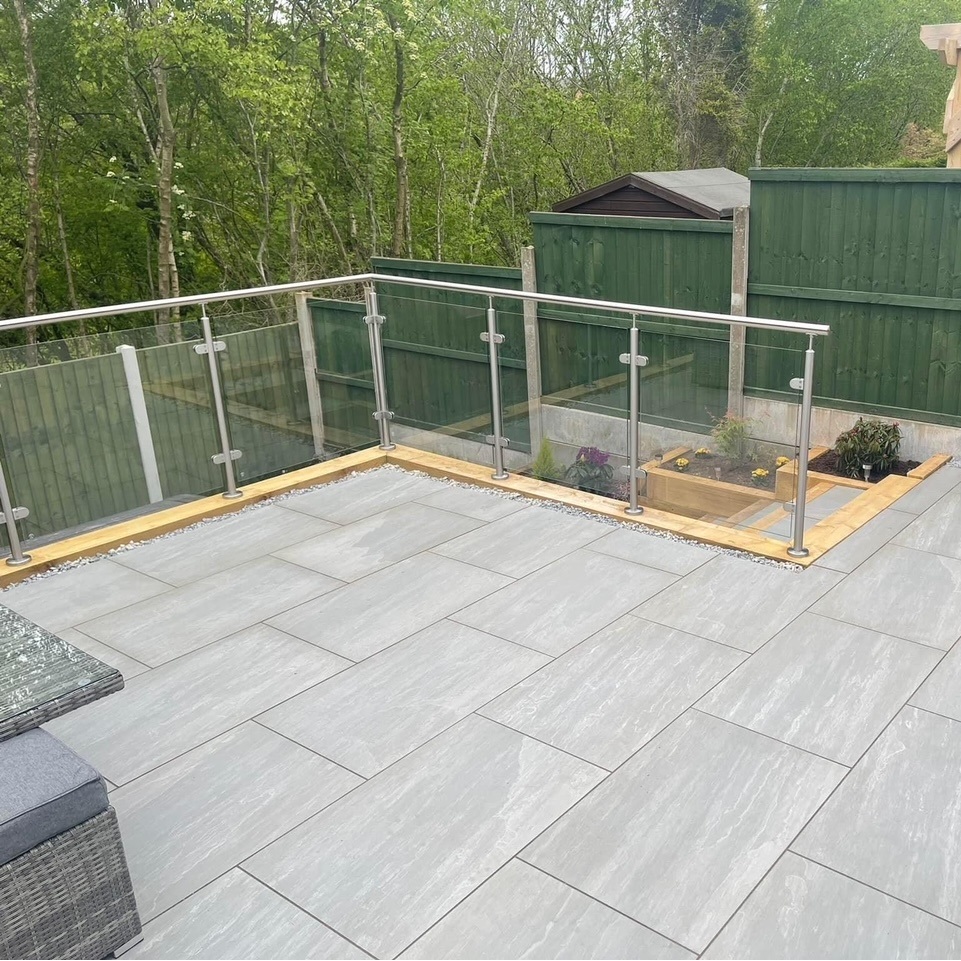
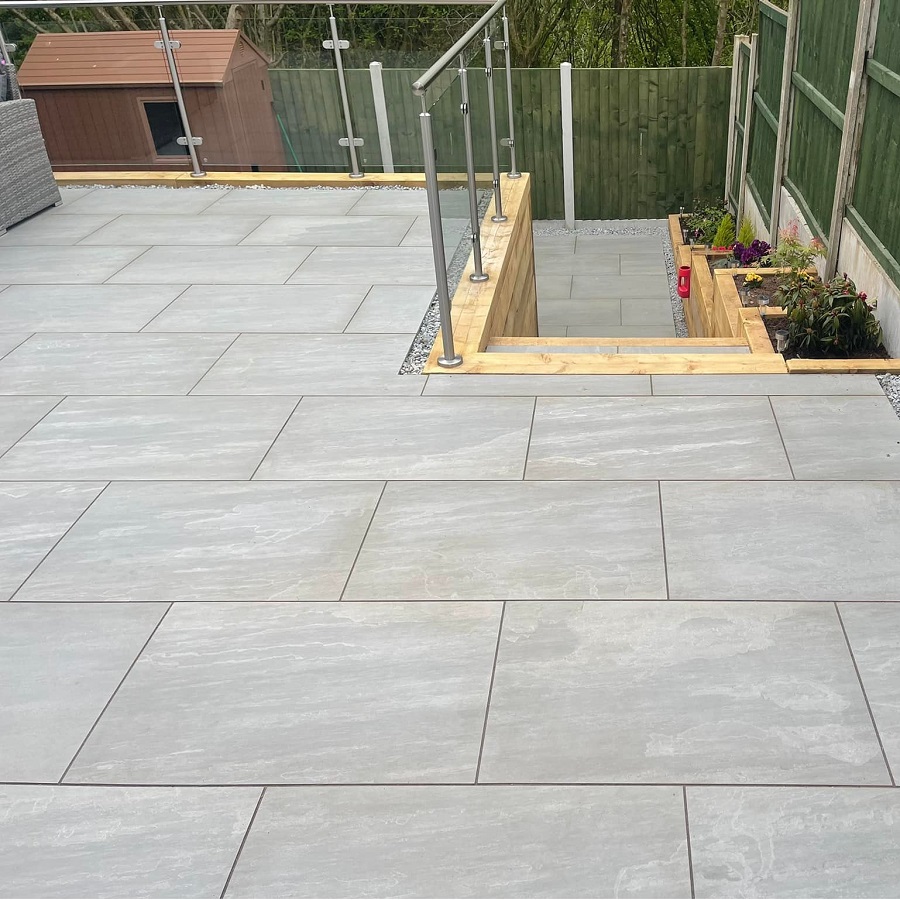
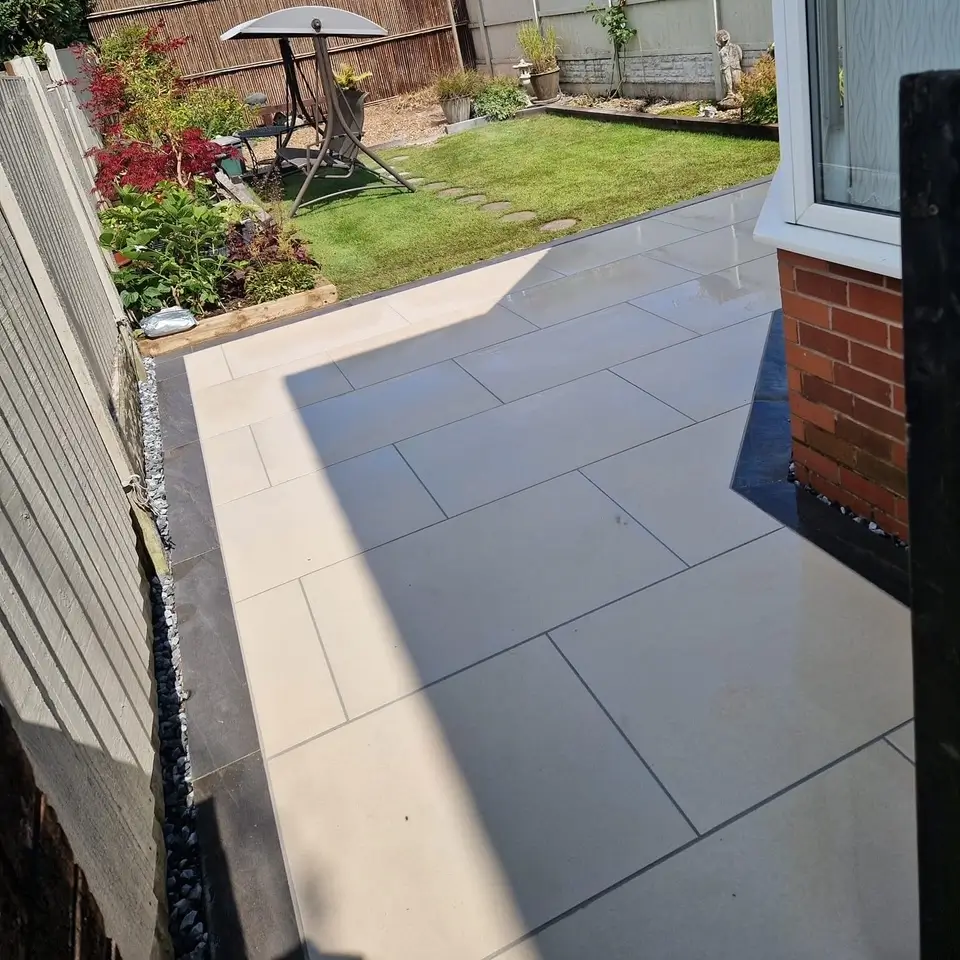
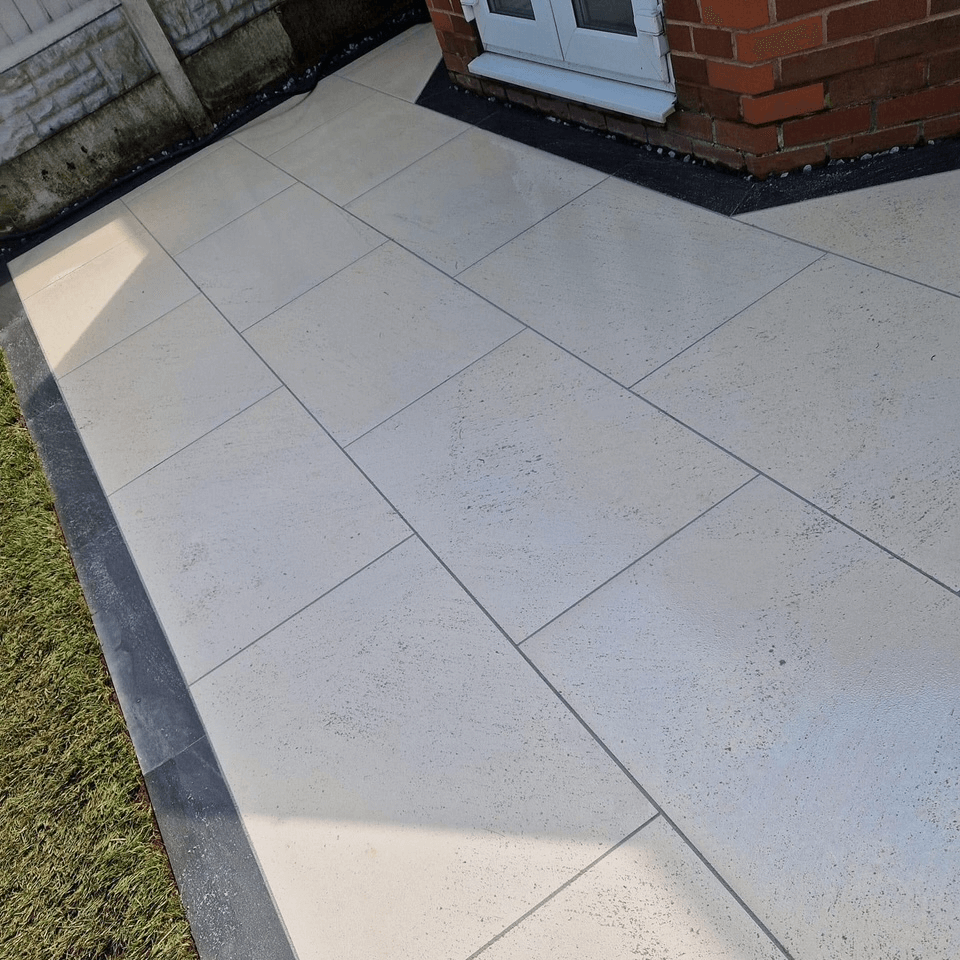
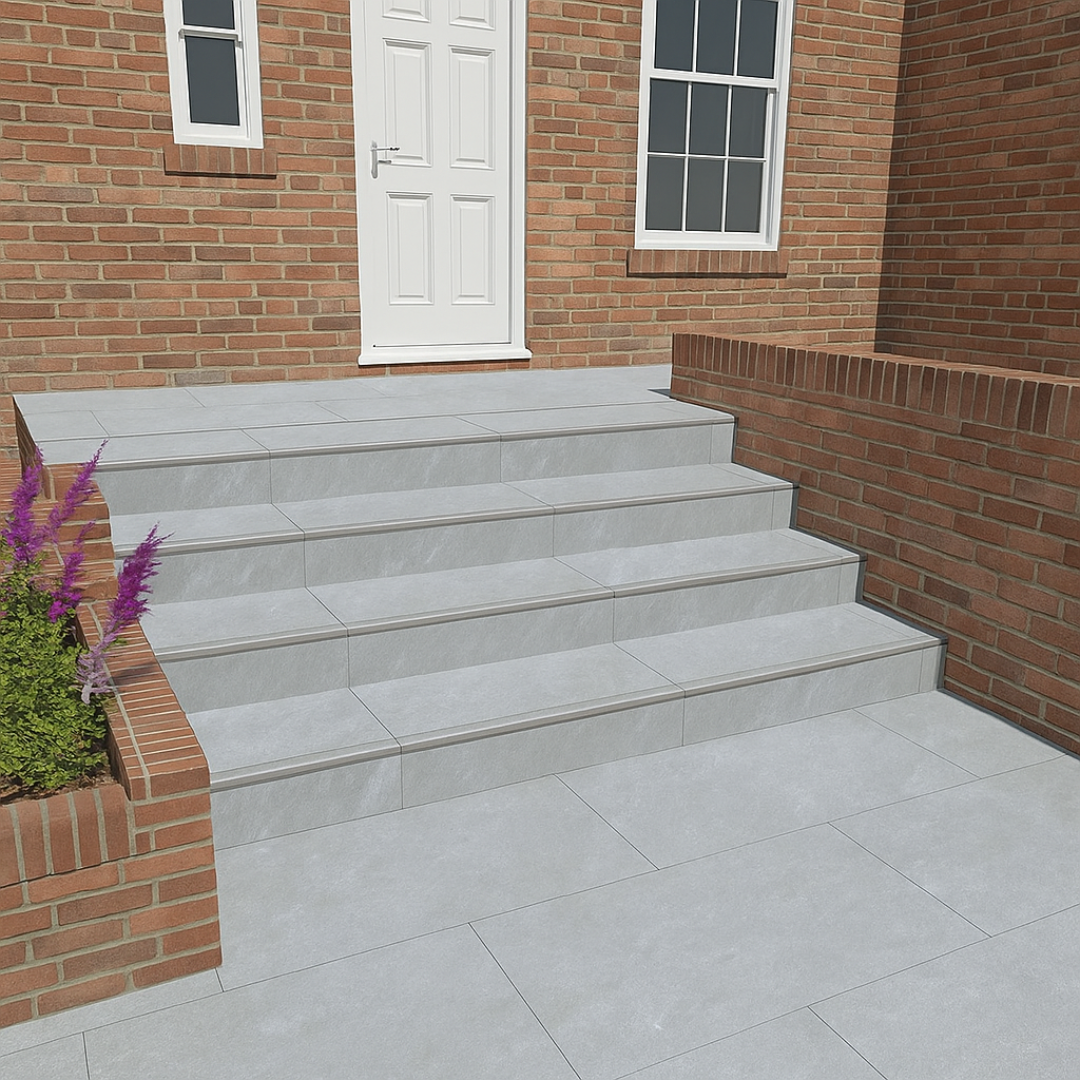
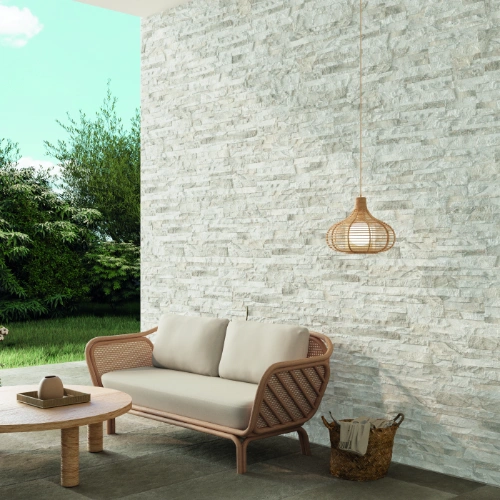
Thanks to its durability and aesthetic versatility, porcelain paving suits a wide range of exterior projects. Whether you’re planning a sleek garden path, a low-maintenance patio, or a durable driveway surface, porcelain garden tiles adapt beautifully to every setting.
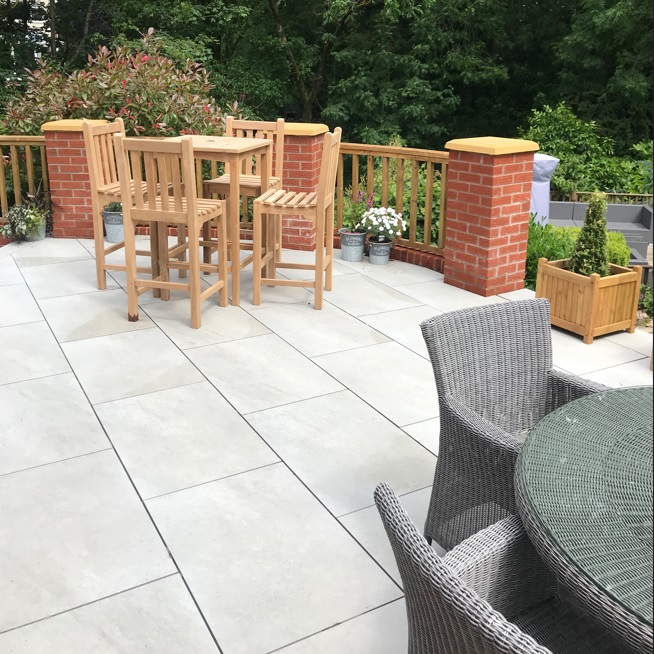
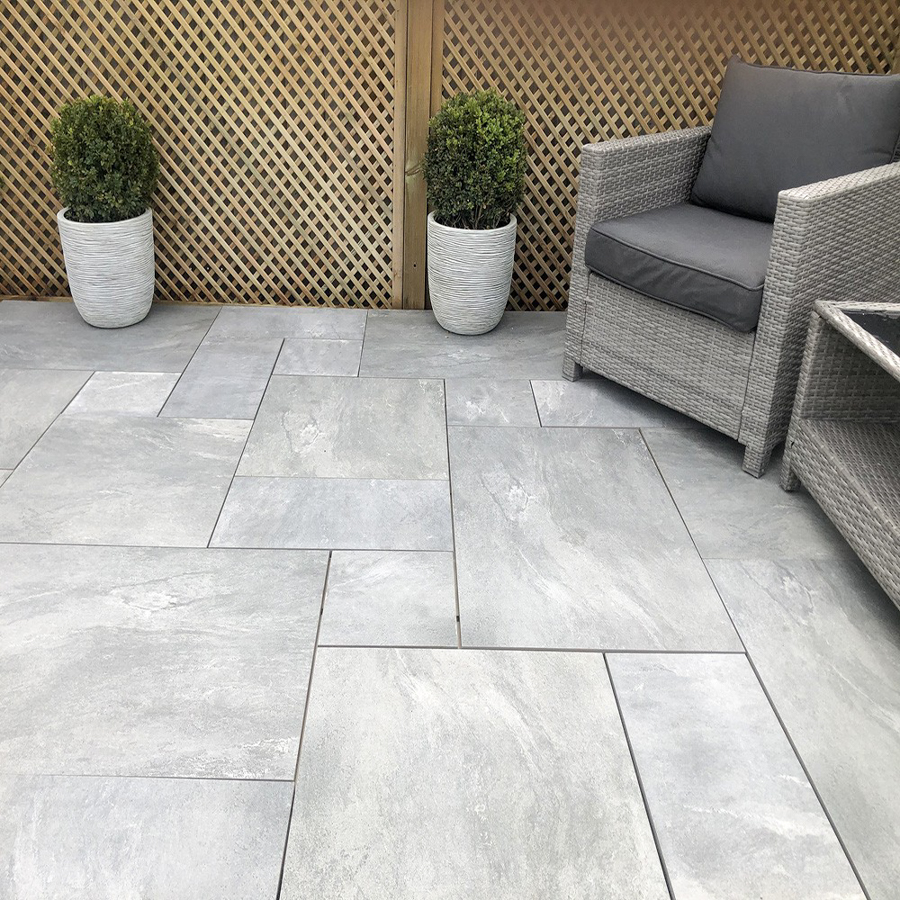
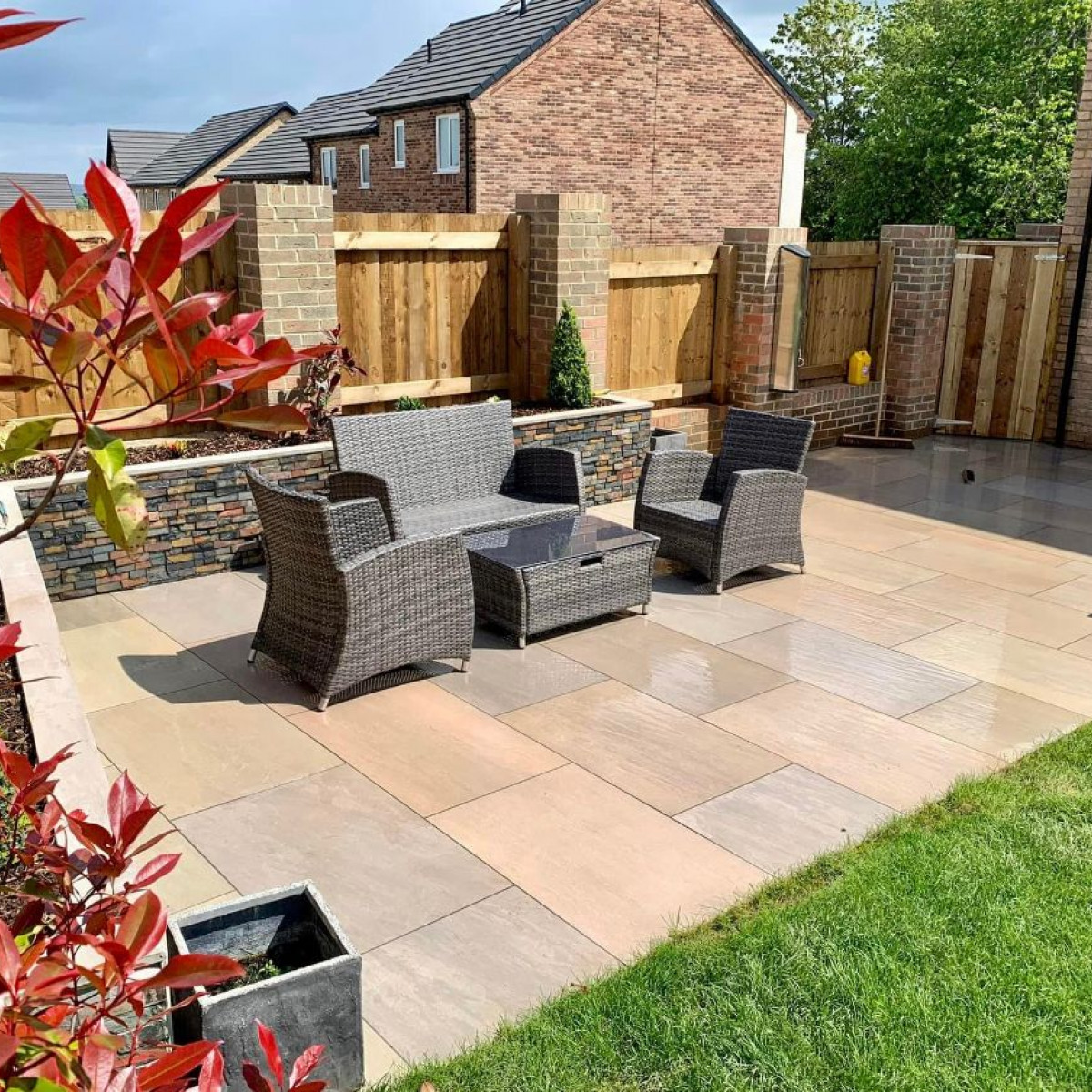
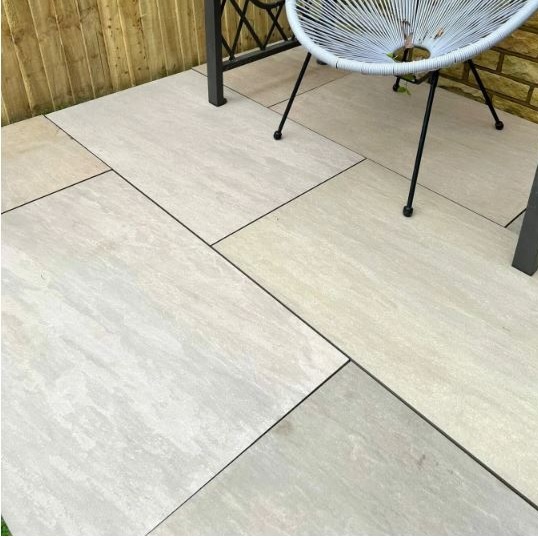
They’re stain-resistant, colour-consistent, and available in designs that suit both traditional and contemporary landscapes, they pairs well with garden furniture, ideal for family patios.
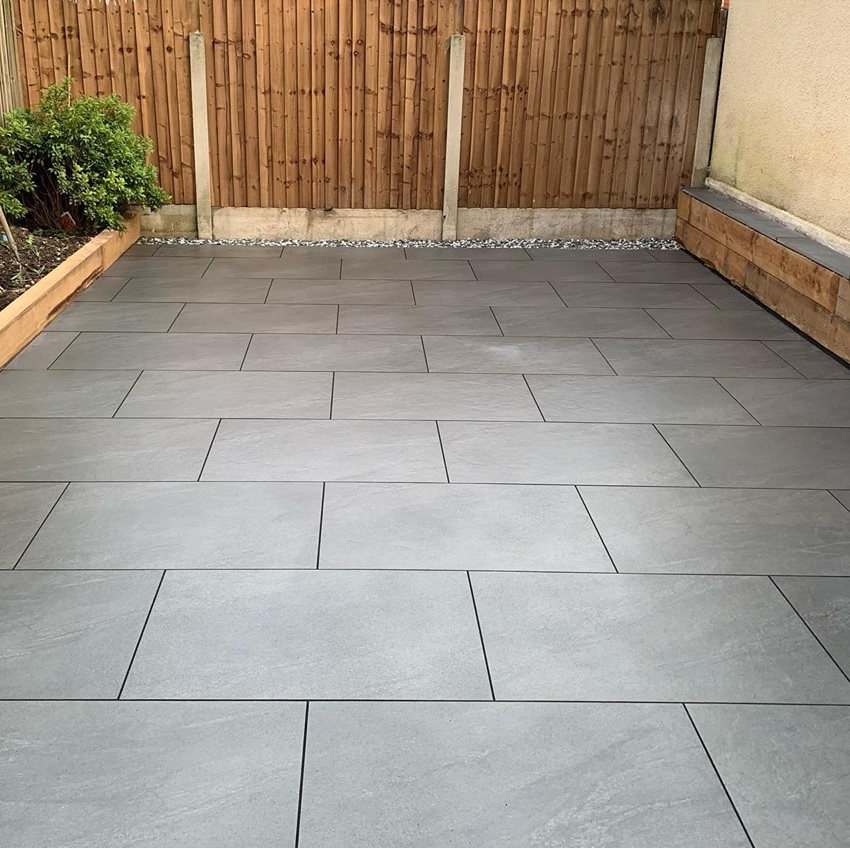
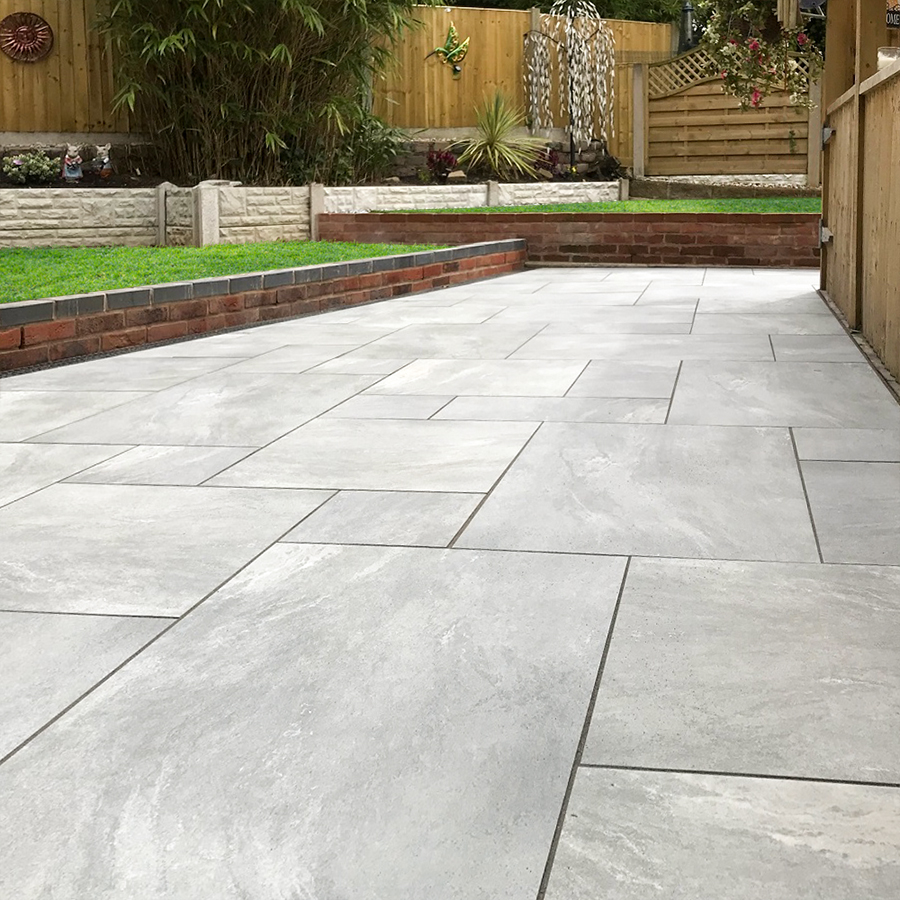
- Garden paths: Porcelain garden slabs offer a clean, easy-to-maintain option that blends function with visual appeal.
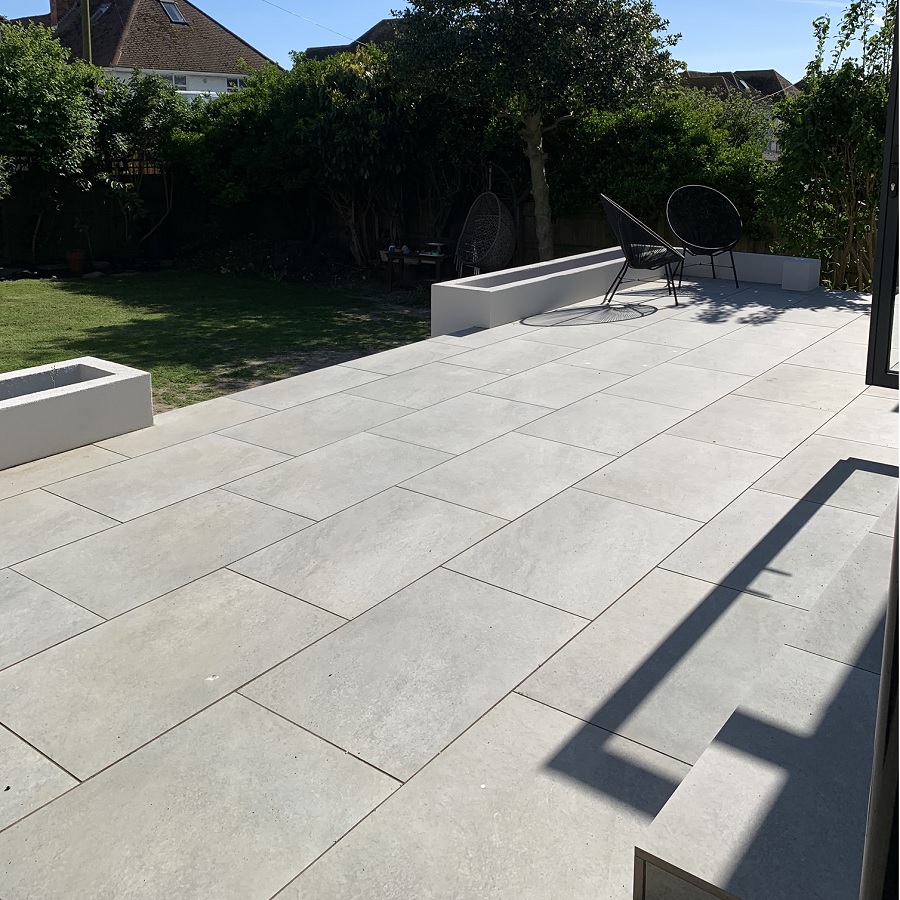
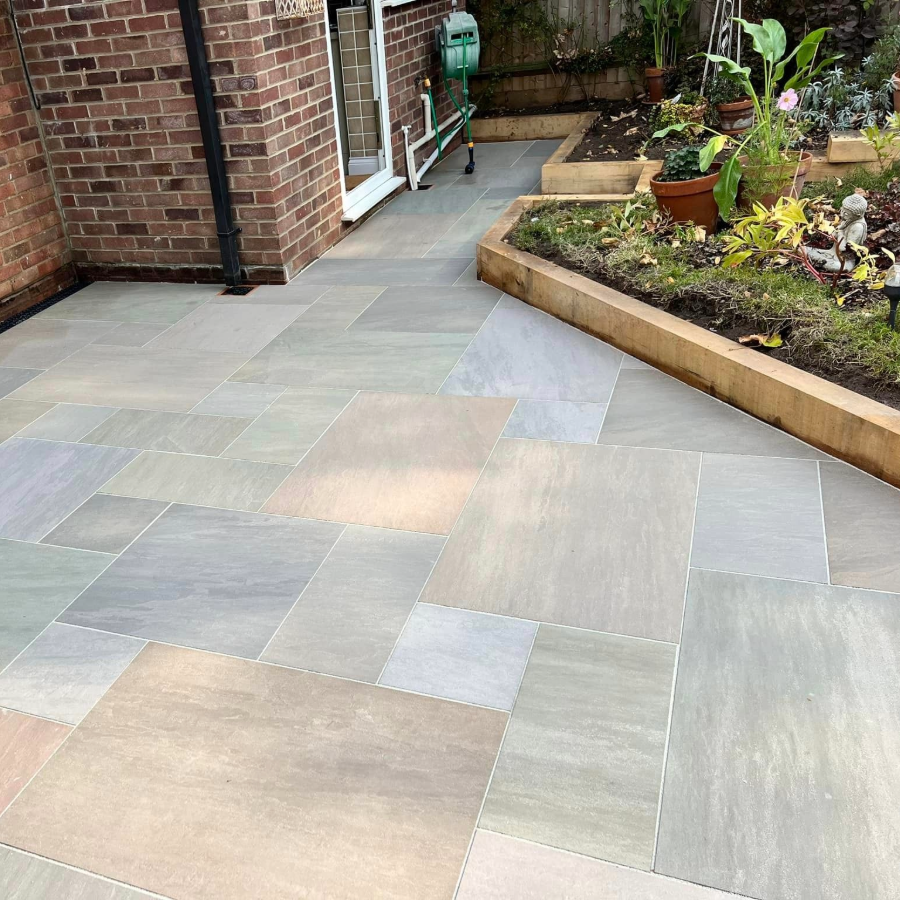
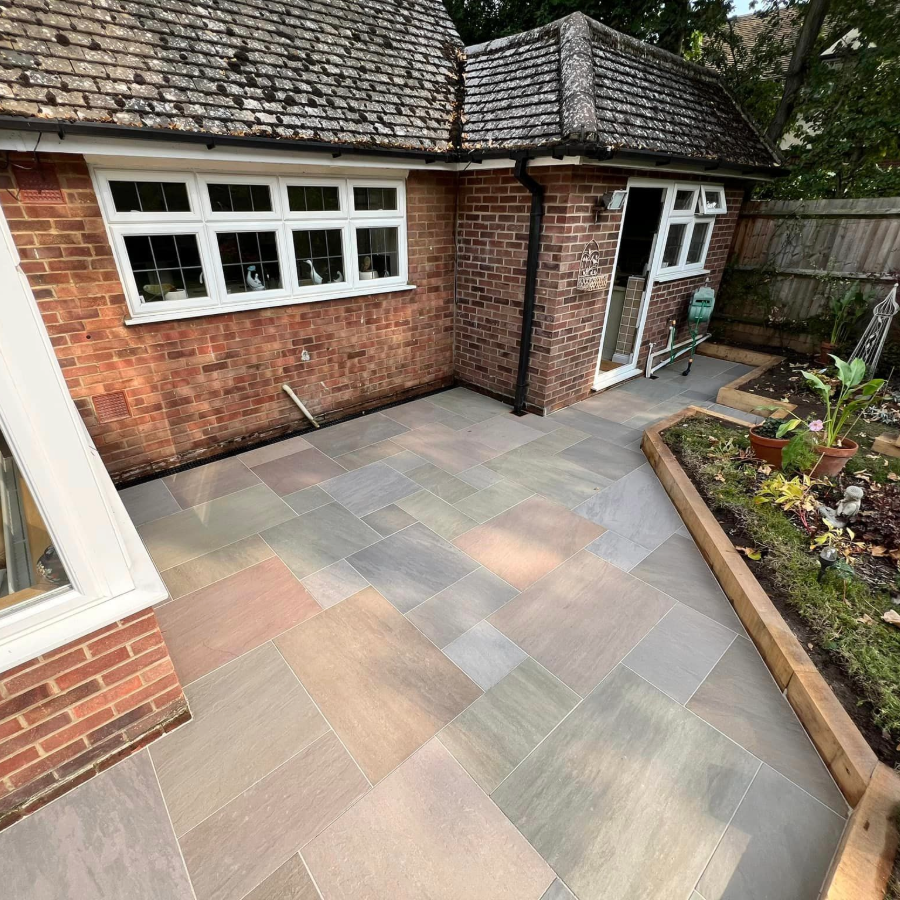
- Patios: Porcelain patio tiles offer a clean, low-maintenance surface that’s perfect for modern outdoor living spaces. Proper installation is key to long-term performance, especially if you're learning how to lay patio slabs on a stable, weather-resistant base.
- Driveways: With proper sub-base and thickness (typically 20mm+), porcelain outdoor slabs can handle vehicle weight and resist cracking.
Styles, Colours, and Finishes
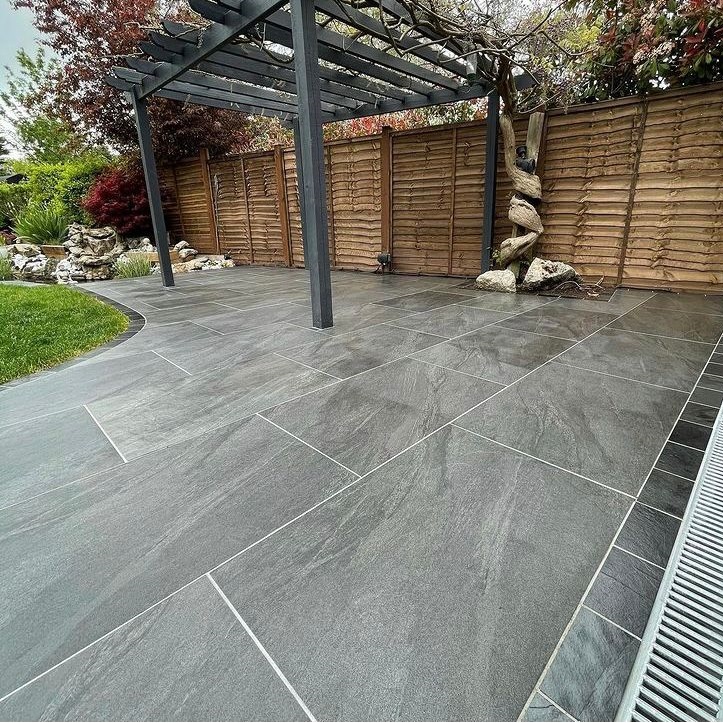
Porcelain paving is available in a wide variety of colours, textures, and styles, offering both design flexibility and consistent quality. Due to its manufactured nature, colours remain uniform across batches, which is perfect for creating seamless outdoor spaces.
Colour Options
Finishes
- Smooth slabs for a minimalist, contemporary patio.
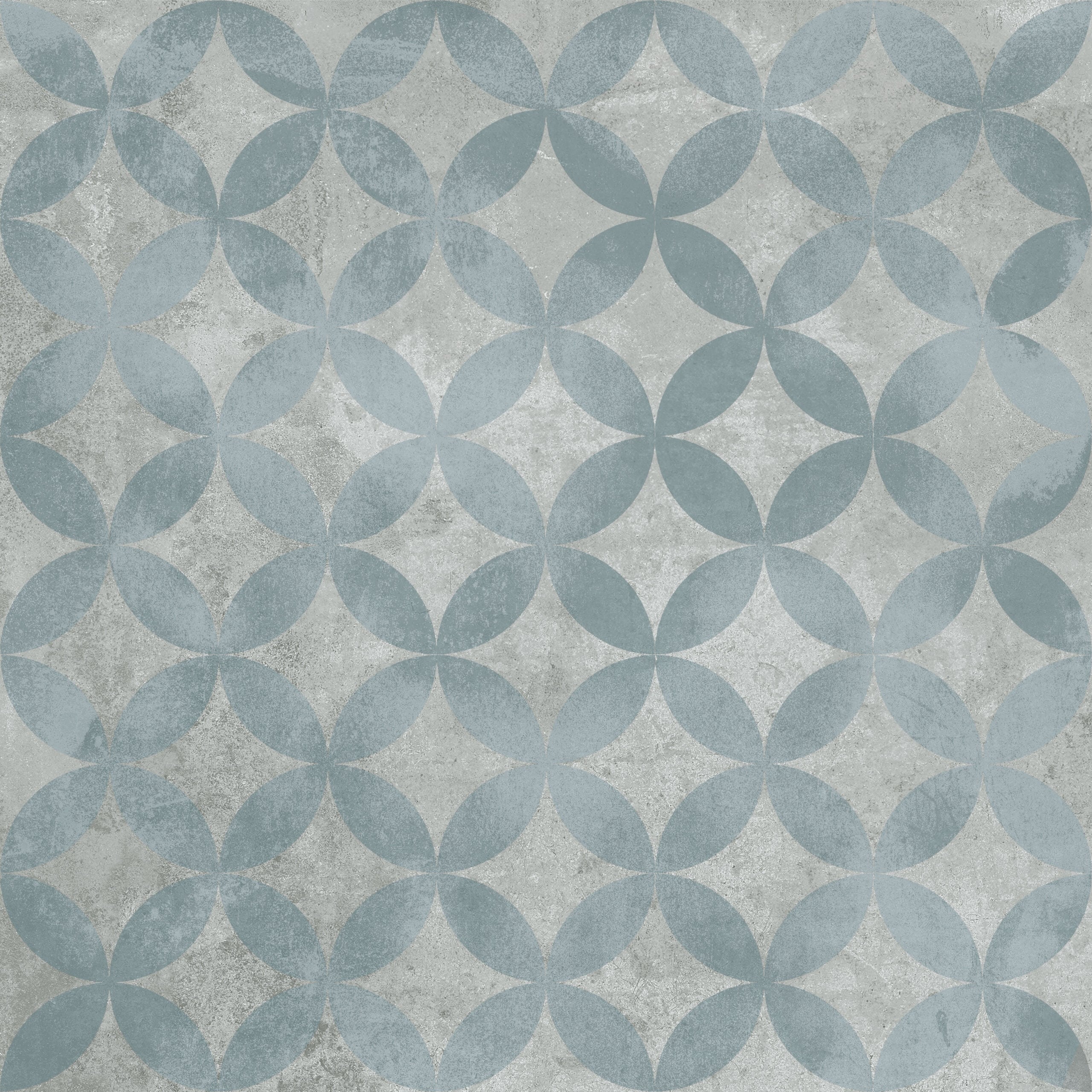
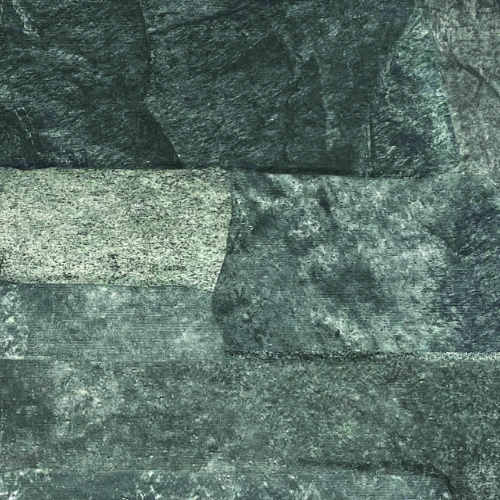
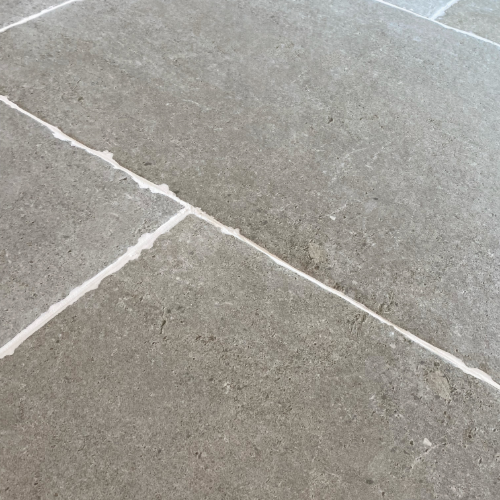
- Textured or riven finishes that mimic natural stone.
- Wood-effect designs for a warm, timber-inspired look without the upkeep.
Maintenance
Porcelain paving is the easiest of the three to maintain, as it requires no sealing and only simple cleaning with warm soapy water. Unlike natural stone paving, which must be sealed to protect against staining, porcelain exterior tiles stay clean with minimal effort. Concrete paving requires moderate maintenance and may need resealing depending on the installation.
Appearance
Outdoor porcelain tiles are available in a wide range of colours and styles, offering consistent finishes and a clean, modern look. Porcelain garden tiles can replicate natural stone or wood effects while maintaining uniformity across batches. In comparison, natural stone delivers a unique, rustic aesthetic, and concrete tends to be more utilitarian in appearance.
Durability
Porcelain slabs are highly durable, offering resistance to scratches, fading, and harsh weather conditions, making them ideal for year-round use. Natural stone is strong but more vulnerable to water absorption and freeze-thaw cycles, especially if not sealed. Concrete slabs are durable too but can crack over time if improperly installed or exposed to extreme weather.
Cost
While porcelain paving slabs are generally mid-range in price, they offer excellent value when you consider their lifespan and low maintenance needs. Natural stone tends to be the most expensive option, both upfront and in ongoing care. Concrete paving is often the most budget-friendly, but may lack the visual appeal and longevity of porcelain.
Porosity
Porcelain outdoor slabs are non-porous, which makes them resistant to moisture, staining, and frost damage. Natural stone, being highly porous, absorbs water easily and must be sealed regularly to prevent damage. Concrete paving slabs fall somewhere in between, being moderately porous and sometimes prone to water absorption.
Cutting
Porcelain slabs are extremely dense, which makes them more difficult to cut than natural stone or concrete. To install porcelain paving effectively, you’ll need specialist tools such as a diamond-tipped blade and water-fed cutting equipment. While natural stone paving and concrete slabs are easier to cut, the extra effort required for porcelain tiles is often worth it for the precision and durability they offer.
Porcelain vs. Natural Stone vs Concrete
Choosing between porcelain, natural stone, and concrete involves considering cost, appearance, and ongoing maintenance. Porcelain paving excels in low maintenance and durability, while natural stone offers unique textures, and concrete remains an affordable but more utilitarian option.
Use the table below to compare.
| Feature |
Porcelain |
Natural Stone |
Concrete |
| Maintenance |
Low maintenance; no sealing required |
Requires sealing and ongoing treatment |
Moderate maintenance; may need sealing |
| Appearance |
Wide variety of finishes and colours; uniform appearance |
Unique, natural patterns and textures |
Limited design options; more utilitarian |
| Durability |
Extremely durable and resistant to weather |
Durable but can weather and stain |
Durable and affordable |
| Cost |
Mid-range cost |
Typically higher cost |
Most affordable option |
| Porosity |
Non-porous |
Highly porous |
Moderately porous |
| Cutting |
Harder to cut; requires specialist tools |
Easier to cut than porcelain |
Easy to cut |
Maintenance Tips
Porcelain paving is extremely easy to care for, making it ideal for outdoor areas that need to stay clean and presentable with minimal effort.
- Sweep regularly to remove dirt, leaves, and other debris.
- Clean occasionally with warm, soapy water and a soft-bristle brush.
- Avoid harsh chemicals or acidic cleaners.
- Pressure washing is generally safe but should be done carefully to protect joints.
- Thanks to its non-porous surface, porcelain paving resists moss, algae, and frost damage.
- Ensure proper drainage during installation to prevent standing water in colder months.
FAQs (Frequently Asked Questions)
Can I use porcelain paving in driveways?
Yes, porcelain paving can be used in driveways if laid on a suitable sub-base and using 20mm thick tiles. Its strength and scratch resistance make it capable of supporting light vehicle traffic. Always follow installation best practices for long-term durability.
Does porcelain paving get slippery when wet?
Porcelain paving is designed with slip resistance in mind and many options include textured or riven surfaces. These features help maintain grip even in wet weather. Always check the slip rating if you’re paving around pools or high-traffic areas.
Do porcelain slabs fade over time?
Porcelain slabs are UV-resistant, so they hold their colour even after years of sun exposure. The pigments used in the manufacturing process are baked in at high temperatures. This makes porcelain ideal for long-term use in outdoor spaces.
Are porcelain slabs frost-resistant?
Yes, porcelain paving is naturally frost-resistant due to its low water absorption rate. Unlike porous materials, it won’t absorb moisture and crack in freezing conditions. Just ensure proper installation with a solid base and good drainage.
Do porcelain tiles crack?
Porcelain tiles are very strong and dense, making them highly resistant to cracking under normal use. Cracks are usually the result of poor installation or an unstable sub-base. Use quality adhesives and a level foundation to avoid this issue.
How are porcelain slabs made?
Porcelain slabs are made by compressing refined clay and minerals, then firing them at over 1200°C. This process creates an incredibly dense, non-porous tile that resists water, stains, and wear. The result is a consistent, durable product perfect for external use.
Can I cut porcelain slabs?
Yes, but cutting porcelain requires the right tools due to its hardness. A diamond-tipped blade and a water-fed cutting table are recommended for clean edges. Always wear safety gear and make precise measurements before cutting.
How long do outdoor porcelain tiles last?
Outdoor porcelain tiles can last 20-30 years or more with minimal upkeep. Their resistance to UV, frost, and staining helps preserve their appearance and strength. When installed properly, they remain an excellent long-term investment.
Is porcelain paving better than sandstone?
Porcelain paving is better in terms of maintenance, slip resistance, and durability. Sandstone offers a natural look but requires more upkeep and is more vulnerable to stains and weathering. If you’re after longevity and ease, porcelain is the superior choice.